If you are new to cannabis concentrates, one of the first comparisons you will probably run into is kief vs hash. The two are closely related, often made from the same part of the plant, and sometimes even used in similar ways. That is exactly why so many people confuse them.
The main difference is simple. Kief is the loose, powdery resin that collects from cannabis flower, while hash is usually a more compressed or processed form of that resin. Both can be potent, flavorful, and versatile, but they are not interchangeable in every situation.
In this guide, we will break down what kief and hash actually are, how they differ, how people use them, and which one may make more sense depending on your experience level and preferences.
What Is Kief?
Kief is the fine, crystal-like material that falls off cannabis flower over time. It is made up largely of trichomes, the tiny resin glands that contain cannabinoids and aromatic compounds called terpenes.
If you have ever opened a grinder and noticed a dusty, golden layer collecting in the bottom chamber, that is kief. It builds up naturally as dried flower is broken down, especially when using a multi-piece grinder with a screen.
Kief contains a higher concentration of the plant’s resin, which is why many people collect and save it to boost potency when they want a stronger experience.
Kief is usually:
loose and powdery
pale green to golden in color
easy to sprinkle into other products
collected gradually over time
Because it is so simple to gather, kief is often the first concentrate-like product beginners come across.
What Is Hash?
Hash, also known as hashish, is a concentrated cannabis product made by collecting and compressing resin. In many cases, hash starts with kief, but it can also be produced using different resin separation methods, from traditional to modern.
Once the resin is gathered, it is pressed, shaped, or further processed into a denser form. That is what gives hash its more solid texture and more concentrated feel compared to loose kief.
There are different types of hash, including:
Dry Sift Hash
This is made by separating trichomes mechanically through fine screens. It is one of the closest forms to traditional kief, but usually cleaner and more refined.
Bubble Hash
Bubble hash is made with ice water and filtration bags. This method helps separate resin from plant material without using chemical solvents.
Pressed Hash
This is typically made by taking kief or sifted resin and compressing it into blocks, coins, or soft pieces. Pressure, heat, or both may be used depending on the style.
Hand-Rubbed or Traditional Hash
In some regions, hash has historically been made by collecting sticky resin by hand and shaping it into balls or slabs.
The result is usually a product that is denser, stickier, and more compact than kief.
Kief vs Hash: Key Differences Explained
Kief and hash come from the same general source, but the final product feels quite different.
Texture
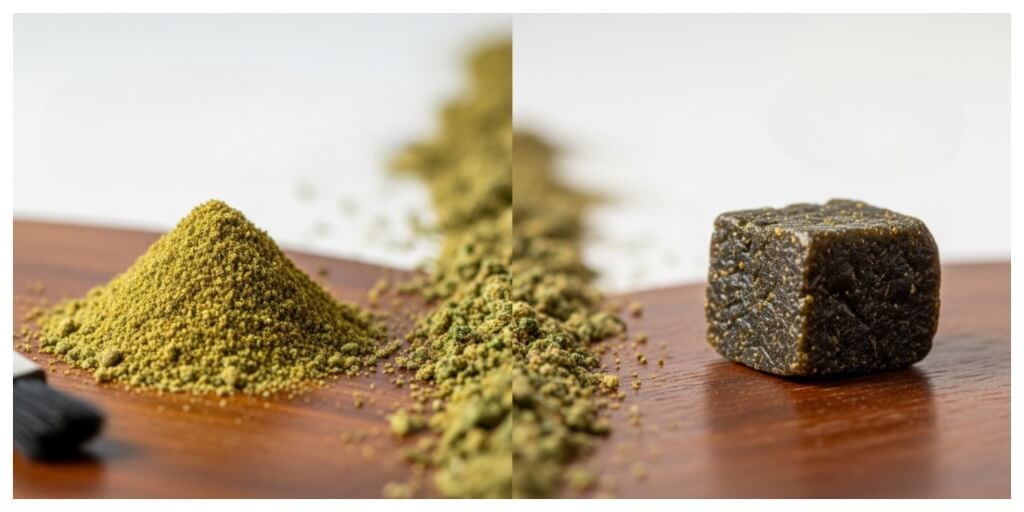
Kief is dry, loose, and powdery. It falls apart easily and can be sprinkled over flower or added into other products.
Hash is more compact. Depending on the type, it may be soft, crumbly, sticky, or firm enough to break apart in pieces.
Potency
Both can be potent, but potency depends on purity, production method, and starting material. Some kief is very clean and strong. Some hash is more refined and therefore more concentrated.
This is why there is no single rule that hash is always stronger than kief or the other way around.
Flavor and Aroma
Kief often keeps a more direct connection to the original flower’s terpene profile, especially when fresh.
Hash can have a richer, deeper, and sometimes more processed aroma depending on how it was made and aged. Some users prefer that fuller character, while others like the brighter feel of loose resin.
Ease of Use
Kief is usually easier to use right away. You can collect it and sprinkle it with very little prep.
Hash may need to be broken up, softened, or handled differently depending on the texture. That makes it feel slightly less convenient for absolute beginners.
Production Process
The biggest structural difference is this:
Kief is collected
Hash is made
Kief forms naturally when trichomes separate from flower. Hash involves an extra step, whether that means pressing, sifting, washing, or refining the resin further.
Is Kief Stronger Than Hash?
This is one of the most common questions, and the honest answer is: not always.
In many cases, hash will test higher in cannabinoids because it is more refined and more concentrated than basic grinder kief. But high-quality kief can still be very strong, especially when it contains little plant matter.
A few things affect potency:
the quality of the starting flower
how clean the trichome separation is
how much plant material is mixed in
whether the resin has been further concentrated
Low-grade kief can be weaker than well-made hash. On the other hand, very clean dry sift kief can compete with some forms of hash quite closely.
So if you are comparing kief vs hash potency, the better question is not just what category it belongs to, but how well it was made.
How to Use Kief vs Hash
Kief and hash can both be used in several ways, although the texture changes how convenient each one feels.
Sprinkling Into Flower
Kief is especially easy to use, as you can just sprinkle it onto ground flower. Many people add a small amount to a joint, cone, or bowl for a stronger session.
Hash can also be added, but it usually needs to be broken or rollen first, which might take some practice.
Some vaporizers can handle concentrates, but not all of them are designed for loose kief or sticky hash. Device compatibility matters here.
In general, kief may be easier to mix with flower in a dry herb vaporizer, while hash works better in devices that can handle denser material or concentrate-style use.
Kief vs Hash for Beginners: Which Should You Choose?
For beginners, the best option usually comes down to convenience, cost, and familiarity.
Kief tends to feel more approachable because it is easy to collect and easy to use. If someone already uses flower and owns a grinder, they may already have access to kief without buying anything extra.
Hash can be appealing because it feels more traditional, concentrated, and intentional. But depending on the form, it may require more handling and a bit more product knowledge.
Here is the beginner-friendly breakdown:
Choose Kief If You Want:
something easy to collect
simple use with flower
less handling and prep
a low-barrier introduction to concentrates
Choose Hash If You Want:
a more classic concentrate format
denser texture and stronger feel
a broader range of traditional styles
a product that feels more refined or intentional
If you are completely new, getting familiar with kief is usually a nice starting point.
Can You Turn Kief Into Hash?
Yes, in many cases, kief can be turned into hash.
That is one of the reasons the two products are so closely linked. When kief is pressed together using pressure, and sometimes a little heat, it can bind into a more solid, hash-like form.
This is essentially what happens with many traditional styles of pressed hash. The loose resin is compressed into something denser, more cohesive, and easier to store in a solid form.
At a basic level, turning kief into hash usually involves:
gathering enough kief
applying pressure
sometimes using gentle warmth
shaping it into a compact piece
The cleaner the kief, the better the final result tends to be.
Final Takeaway: Kief vs Hash Pros and Cons
There is no universal winner in the kief vs hash debate. It really depends on what kind of experience you want.
Kief is easier, looser, and more beginner-friendly. Hash is denser, more processed, and often feels more premium or traditional.
If your priority is convenience, kief probably wins. If your priority is a more concentrated and classic resin experience, hash may be the better choice.
Cannabis has some seriously strange names. From Cat Piss and Unicorn Poop to Northern Lights, explore 30 of the funniest, weirdest and most interesting cannabis strain names and the stories behind them.
Hemp is cannabis – but the distinction between hemp and other cannabis varieties can get surprisingly complicated. Learn how THC, CBD, genetics, cultivation, uses and legislation shape the difference between cannabis and hemp.
CBG and lion’s mane are both used in focus supplements, but they work differently. Compare their potential uses, limitations, side effects and suitability for ADHD routines.