
Everything You Need to Know About Cannabis Culture
Explore the history, cultivation, genetics, music, politics, wellness and communities that have transformed cannabis from an ancient crop into a global culture.
Login
Register


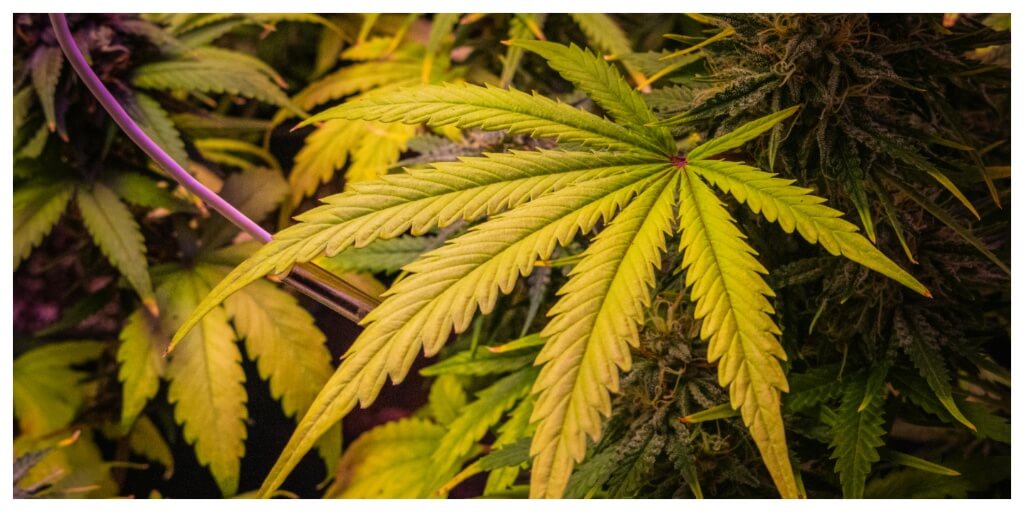
So, you have succesfully germinated your cannabis seeds and your plant is beginning to look like the real deal. But the journey is not over yet. What does it mean if the leaves are turning yellow, edges are browning, stems weakening, or growth slowing down?
One of the most common reasons for these symptoms is cannabis nutrient deficiencies.
A nutrient deficiency happens when a plant does not have access to enough of a specific nutrient it needs for healthy growth. That does not always mean the nutrient is missing from the soil or growing medium. Sometimes the nutrient is present, but the plant cannot absorb it properly because of pH imbalance, overwatering, root stress, or environmental problems.
This guide explains the most common cannabis nutrient deficiency symptoms in a simple, visual way.
This article is for educational purposes only. Cannabis cultivation laws vary by country, so always check local regulations before germinating or growing cannabis seeds.
Cannabis nutrient deficiencies happen when the plant cannot access enough essential nutrients. Like other plants, cannabis relies on macronutrients and micronutrients to support growth, leaf development, root function, and flowering.
The key macronutrients are:
Other important nutrients include:
Plant nutrient symptoms are not always exact. A yellow leaf does not automatically mean nitrogen deficiency. It could also be overwatering, poor light, root stress, pH issues, or natural aging.
That is why the best approach is to look at where the symptom appears, how it spreads, and what the leaf actually looks like.
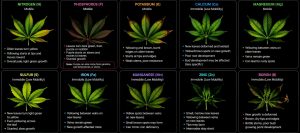
Yellow leaves are one of the most searched cannabis plant symptoms. The problem is that yellowing can come from many causes.
Yellow leaves may point to:
In hemp, nitrogen deficiency is commonly described as pale green to yellow coloring, often appearing first on older leaves. Nutrient availability can also decrease when conditions become too acidic or too alkaline.
So before assuming the plant needs more food, it is important to understand the pattern.
Nitrogen is one of the most important nutrients during vegetative growth. It supports green leaf development and overall plant vigor.
Common nitrogen deficiency symptoms:
Nitrogen is a mobile nutrient, which means the plant can move it from older leaves to newer growth. That is why symptoms often show up at the bottom of the plant first.
Simple way to recognize it:
If the older, lower leaves are turning yellow while the top still looks greener, nitrogen deficiency is one possible cause.
Phosphorus supports root development, energy transfer, and flowering. A phosphorus issue can be harder to recognize than nitrogen deficiency because it does not always show as simple yellowing.
Common phosphorus deficiency symptoms:
Utah State University’s hemp nutrient deficiency guide lists symptoms connected with phosphorus issues, including purple petioles, bluish-green leaves, slowed plant growth, lower-leaf discoloration, small flower buds, and delayed flowering.
Simple way to recognize it:
If the plant looks dark, slow, and slightly purple or bronze on older growth, phosphorus may be part of the issue.
Potassium helps with overall plant function, water movement, and stress resistance. It is often associated with leaf-edge symptoms.
Common potassium deficiency symptoms:
Potassium deficiency can sometimes look like nutrient burn because the edges may appear crispy or scorched. The difference is that true nutrient burn often starts at the tips after overfeeding, while potassium-related symptoms can spread along the leaf edges and appear with broader weakness.
Simple way to recognize it:
If leaf edges look burnt while the plant also appears weak or uneven, potassium deficiency may be worth investigating.
Magnesium is important for chlorophyll, the green pigment plants use for photosynthesis. When magnesium becomes limited, leaves often lose green color between the veins.
Common magnesium deficiency symptoms:
Magnesium is another mobile nutrient, so symptoms often begin on older leaves before moving upward.
Simple way to recognize it:
If older leaves turn yellow between the veins while the veins stay green, magnesium deficiency is a common suspect.
Calcium supports cell structure and new growth. Unlike nitrogen and magnesium, calcium is not very mobile inside the plant. That means symptoms often show up in newer growth first.
Common calcium deficiency symptoms:
Calcium problems are often connected to water quality, pH imbalance, or root-zone issues. In container growing, calcium deficiency can sometimes appear even when nutrients are present if the plant cannot absorb them properly.
Simple way to recognize it:
If the newest growth looks damaged, spotted, or distorted, calcium may be involved.
Iron is a micronutrient, but it still plays an important role in healthy plant growth. Iron deficiency usually appears in new growth first.
Common iron deficiency symptoms:
Iron deficiency is often related to pH problems. If pH is too high, iron can become less available to the plant even if it exists in the medium.
Simple way to recognize it:
If the newest leaves are yellow but older leaves still look healthier, iron deficiency is one possible cause.
Sulfur deficiency is less common, but it can sometimes be confused with nitrogen deficiency because both can cause yellowing.
Common sulfur deficiency symptoms:
The main difference is location. Nitrogen deficiency usually starts on older leaves, while sulfur deficiency often appears closer to the top or in newer growth.
Simple way to recognize it:
If yellowing starts higher on the plant rather than on old lower leaves, sulfur may be part of the issue.
Zinc and manganese are micronutrients, but deficiencies can still affect leaf shape, color, and growth.
Possible zinc deficiency symptoms:
Possible manganese deficiency symptoms:
These issues are often connected to pH imbalance or nutrient lockout rather than a simple lack of minerals.
Nutrient deficiency and nutrient burn are easy to confuse.
A deficiency means the plant does not have enough access to a nutrient. Nutrient burn usually happens when the plant receives too much fertilizer or a feeding solution that is too strong.
Nutrient deficiency often looks like:
Nutrient burn often looks like:
The important point is not to react too quickly. Adding more nutrients without understanding the cause can make the problem worse.
Sometimes the issue is not that nutrients are missing. The issue is that the plant cannot absorb them.
This is often called nutrient lockout.
Nutrient lockout can happen when the root environment is outside the ideal range, too wet, too compacted, or overloaded with salts. The result can look exactly like a deficiency even when nutrients are present.
That is why visual diagnosis should be treated as a starting point, not final proof.
When looking at possible cannabis nutrient deficiencies, ask three simple questions:
Cannabis nutrient deficiencies can be confusing because many symptoms overlap. Yellow leaves, brown spots, purple stems, and weak growth can have more than one possible cause.
The safest way to think about deficiencies is simple: plant symptoms are clues, not guarantees.
Start by observing the pattern. Look at whether symptoms appear on older or newer leaves. Check whether the issue looks like yellowing, spotting, burning, or distortion. Then consider root health, watering, pH, and the overall environment before assuming the plant simply needs more nutrients.
A careful diagnosis is always better than a fast reaction.
Nitrogen deficiency is one of the most common. It often shows as yellowing on older, lower leaves.
Yellow leaves can come from nitrogen deficiency, magnesium deficiency, iron deficiency, overwatering, pH imbalance, or natural aging.
Magnesium deficiency often causes yellowing between the veins on older leaves, while the veins remain green.
Brown spots may be linked to calcium deficiency, potassium issues, pH imbalance, pests, or disease. The full pattern matters.
No. Nutrient burn usually comes from too much feeding, while deficiency means the plant cannot access enough of a nutrient.

Explore the history, cultivation, genetics, music, politics, wellness and communities that have transformed cannabis from an ancient crop into a global culture.

Discover the mysterious story of goddess Morana, the Slavic figure of winter, death and rebirth, and how her symbolism inspired Morning Weed’s original Morana cannabis flower.
Cannabis is more than THC or CBD. Learn why this ancient plant is called a miracle plant, from hemp fibre and seeds to terpenes, skincare, food, and materials.