Rolling your own joint is a classic ritual. You pick the strain, grind it just right, and shape it into something uniquely yours. But one question always comes up: how much THC is actually in a joint?
Since joints don’t come with nutrition labels, calculating THC content requires a little cannabis math mixed with real-world variables. This guide breaks down how to estimate THC in a joint, the factors that affect your experience, and how it all compares to edibles.
Key Factors That Determine THC Content in a Joint
Every joint is different, but the amount of THC you end up with depends mainly on three things:
- Cannabis weight – how much flower goes into the roll
- THC percentage – the potency of the strain you’re using
- Absorption efficiency – how much your body actually takes in
Two joints rolled with the same strain can still feel very different if one is loosely packed, stored longer, or smoked differently.
Average THC in a Joint: What the Numbers Say
Research suggests the typical joint falls somewhere between 0.3 and 0.7 grams of cannabis, with 0.5 grams being the most common.
For potency, many strains hover around 15–25% THC in regulated markets. Using 20% THC as an example:
- 1 gram = 200 mg THC total
- 0.5 gram = 100 mg THC total
But remember, smoking isn’t 100% efficient. On average, your body absorbs only 20–30% of that THC. That means a half-gram joint with 20% THC actually delivers closer to 20–30 mg of THC.
How to Calculate THC in a Joint (Step-by-Step)
Want to estimate the strength of your own joint? Here’s a simple process:
1. Measure the Cannabis You Roll

Use a small digital scale to weigh your flower. Even small differences in grams will change the math.
2. Know the THC Percentage
In legal markets, this number comes from lab testing. Without a lab report, you’ll have to use a general estimate for your strain.
3. Do the Math
THC (mg) = Weight (g) × THC % × 1000
Example: 0.6 grams of cannabis at 25% THC = 150 mg THC total.
4. Adjust for What You Actually Absorb
Because combustion wastes cannabinoids, only about a quarter makes it into your bloodstream. That same 150 mg joint would likely deliver closer to 35–40 mg THC absorbed.
Factors That Affect How Much THC You Absorb
Even with the math, your actual experience can shift depending on how the joint is rolled, smoked, and stored.
Inhalation Technique
Slow, steady inhales deliver more THC than shallow puffs. But holding smoke in doesn’t increase effects, it only irrit
ates your lungs.

Joint Construction
- Tight rolls = slower burn but limited airflow
- Loose rolls = fast burn and wasted cannabinoids
- Balanced grind = smooth and even combustion
Freshness and Storage
Over time, THC degrades into CBN. Proper storage (cool, dark, airtight) preserves potency.
THC Bioavailability Explained
Why don’t you get 100% of the THC in your joint? Because of bioavailability: the percentage your body actua
lly absorbs. With smoking, bioavailability averages 20–30%, depending on metabolism, lung capacity, and smoking style.
This explains why one person might feel a joint strongly while another barely notices, even with the same flower.
Joints vs. Edibles: Which Delivers More THC?
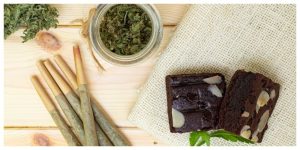
Joints and edibles both deliver THC, but the way your body processes them makes for very different effects. Here’s how they compare:
Joints
-
Absorption: About 20–30% of the THC is absorbed
-
Onset: Felt within minutes
-
Duration: Lasts 1–3 hours
-
Why people choose it:
-
Quick, social, and easy to share
-
Easier to control your intake, just stop when you’ve had enough
-
Shorter duration makes it ideal for casual use
Edibles
-
Absorption: Around 5–15% makes it into your system, but the effects are often stronger
-
Onset: Takes 30 minutes to 2 hours to kick in
-
Duration: Lasts 4–6+ hours
-
Why people choose it:
-
Long-lasting effects, helpful for sleep or deep relaxation
-
Discreet: no smoke, smell, or rolling involved
-
More intense body-focused experience due to liver metabolism
The Bottom Line
If you want something fast and flexible, a joint is your go-to. If you’re after sustained effects and don’t mind waiting for the onset, an edible might be the better choice. Neither is “stronger” across the board, it’s all about what kind of experience you’re after.
Final Takeaway on Calculating THC in a Joint
There’s no universal number for how much THC a joint contains. The weight of your flower, its potency, and how you consume it all play major roles. While formulas help you estimate, your personal experience is shaped just as much by bioavailability, rolling style, and storage.
At the end of the day, the math is useful, but every joint is its own story.