Walk past a hemp field and then look at a cannabis plant growing in a greenhouse. You might assume you are looking at two different plants.
Botanically, things are not nearly that simple.
Hemp is cannabis. The words “hemp” and “cannabis” are mainly used to distinguish plants according to their genetics, chemistry, cultivation, intended use and, increasingly, the law.
That is also why the cannabis vs. hemp question creates so much confusion. One plant may be grown several metres tall for its stalks. Another may be kept short and carefully trained to produce resinous flowers. A third may be cultivated for CBD while remaining below a legally defined THC threshold.
They can look different, smell different and end up in completely different industries, but they still belong to the same much larger cannabis family.
To understand the difference between cannabis and hemp, it helps to separate a few things that are often mixed together:
botany
THC and CBD
cultivation
agricultural use
history
legal definitions
Once those pieces are separated, the hemp-versus-cannabis debate becomes much easier to understand.
What Is Cannabis?
At its simplest, cannabis is the plant itself – not automatically a drug, a flower or a particular THC level.
Cannabis sativa L. is an accepted botanical species within the Cannabaceae family. Humans have selected and cultivated cannabis for a remarkably wide range of purposes, which is one reason the plant now exists in so many different forms.
Some cannabis varieties have historically been selected for strong stalks and fiber. Others for nutritious seeds. More recently, breeders have concentrated on plants producing particular combinations of cannabinoids, aromas, flower structures and other desirable characteristics.
The plant can produce cannabinoids, including the two that most people recognize:
From: 4.65 €/gSelect options
This product has multiple variants. The options may be chosen on the product page
But those are far from the only compounds found in cannabis. Researchers have identified numerous cannabinoids as well as aromatic compounds such as terpenes.
Different parts of the cannabis plant can also serve completely different purposes. Depending on the cultivar, growers may be interested in its:
flowers, stalks, fibers, seeds, oil or cannabinoid-rich resin.
This enormous diversity is partly why everyday cannabis terminology gets messy.
Words such as sativa, indica, hemp, marijuana and cannabis are frequently used as though they describe neat botanical categories. In reality, some are scientific terms, some developed through agriculture, and others became important mainly because of culture or legislation.
For this article, the useful starting point is simpler:
Cannabis is the broader plant category. Hemp is one way certain cannabis plants are classified and cultivated.
What Is Hemp?
So, what is hemp?
Hemp generally refers to cannabis that has been selected and cultivated for low THC levels and particular agricultural or industrial purposes.
Traditionally, that meant crops grown for things such as:
fiber
rope
textiles
seed
oil
animal or industrial materials
Today, the definition is broader.
Modern hemp may also be cultivated for CBD-rich flowers, cosmetics, extracts and other cannabinoid products, provided the crop complies with the applicable rules in the country where it is grown.
This is where botany begins meeting legislation.
There is no magical genetic switch that turns cannabis into hemp. Instead, humans have selectively bred cannabis populations toward different characteristics over generations. Research comparing hemp and drug-type cannabis similarly describes the distinction as one shaped heavily by human selection and intended use.
Industrial fiber hemp, for example, is usually quite different from the dense flowering plants people associate with modern cannabis culture. It may be planted closely together and encouraged to grow tall, producing long stalks rather than large individual flowers.
CBD-focused hemp is another story.
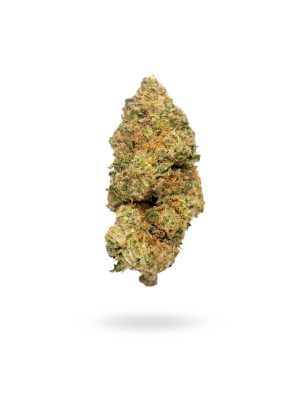
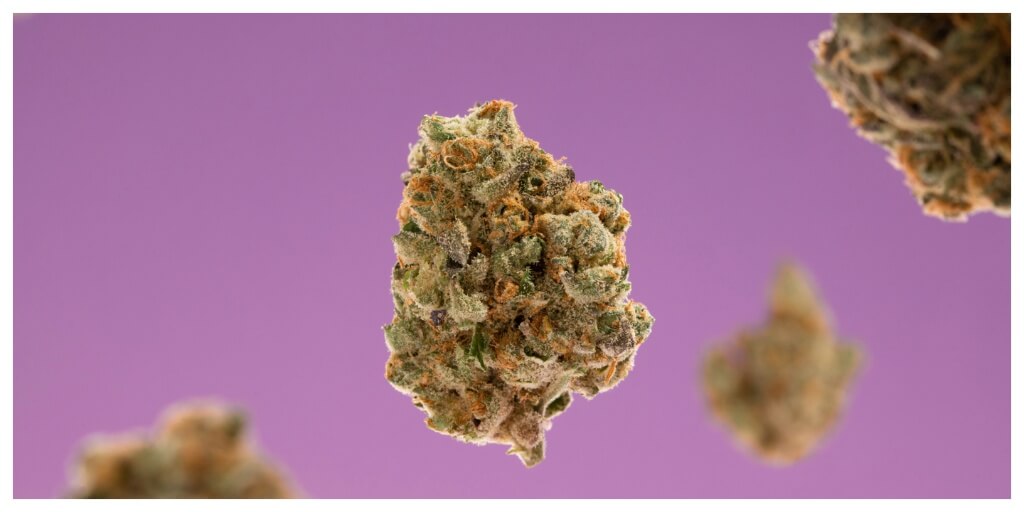
Some modern hemp cultivars have been bred specifically to produce resinous, cannabinoid-rich flowers while maintaining very low THC levels. Those plants can look surprisingly similar to high-THC cannabis.
So if someone asks, “Is hemp cannabis?”
The simple answer is:
Yes. Hemp is cannabis. “Hemp” describes a particular agricultural and legal category of cannabis rather than an entirely unrelated plant.
Cannabis vs. Hemp: The THC Difference
If hemp and cannabis belong to the same broader plant category, why do governments treat them so differently?
Mostly because of one cannabinoid:
THC.
Delta-9-tetrahydrocannabinol, commonly shortened to THC, is the principal cannabis cannabinoid associated with intoxication.
Over time, THC concentration became a practical legal dividing line between what governments classify as hemp and what they regulate as other forms of cannabis.
That dividing line, however, comes from legislation, not from botany.
In the United States, federal hemp legislation established a threshold of 0.3% delta-9 THC on a dry-weight basis. USDA rules still use THC testing as part of hemp production regulation. Federal legislation enacted in November 2025 also amended the federal definition of hemp and introduced additional restrictions affecting cannabinoid products, making the regulatory picture more complicated than simply asking whether a product contains less than 0.3% delta-9 THC.
Europe has its own framework.
Under the current EU Common Agricultural Policy, hemp varieties used for eligible cultivation must have a THC content not exceeding 0.3%, and farmers must use certified varieties from the relevant EU catalogue. But this agricultural threshold should not be mistaken for a universal rule saying that every cannabis-derived product below 0.3% THC is automatically legal throughout Europe. Member States can have additional rules covering cultivation, flowers, extracts, foods and finished cannabinoid products.
That distinction matters.
A THC percentage is part of a legal classification system, not a botanical border between two species.
It is also incorrect to assume that hemp naturally contains absolutely no THC.
Low-THC cannabis varieties can contain THC alongside CBD and other cannabinoids, although concentrations may be extremely low.
High-THC cannabis, meanwhile, has generally been selectively bred toward substantially greater production of THC-rich resin.
Think of it less as two plants separated by a wall and more as different directions humans have pushed the same remarkably adaptable crop.
Does Hemp Have CBD?
Yes.
Hemp can contain CBD.
But two common shortcuts create unnecessary confusion:
CBD does not mean hemp, and hemp does not mean CBD.
CBD, cannabidiol, is simply one of the cannabinoids that cannabis can produce.
Some hemp cultivars contain very little CBD because they were bred primarily for stalks, fiber or seed. Other varieties have been selectively developed specifically to produce CBD-rich flowers.
That distinction became especially visible with the expansion of the modern CBD industry.
Instead of growing tall industrial plants mainly for their stalks, farmers began cultivating low-THC cannabis varieties specifically for their flowers and cannabinoid content. Modern CBD hemp can therefore be much bushier and more resinous than traditional fiber hemp.
CBD can also occur in cannabis varieties that contain substantially more THC. In other words, CBD itself does not determine whether a plant qualifies legally as hemp.
The important variables are the plant’s genetics, cannabinoid profile and the legal requirements applying in the relevant jurisdiction.
That is also why calling every CBD product a “hemp product” can sometimes oversimplify what is actually inside it.
Select options
This product has multiple variants. The options may be chosen on the product page
What Is Hemp Used For?
CBD might dominate modern conversations about hemp, but humans were interested in the plant long before anyone was shopping for cannabinoid extracts.
Hemp is essentially a multi-purpose agricultural crop, and different varieties can be grown for very different parts of the plant.
Hemp Fiber
Historically, one of hemp’s greatest advantages was its stalk.
The outer part of the stalk contains strong bast fibers that can be processed into materials for products such as:
rope and cordage
textiles
canvas
paper
composite materials
Fiber varieties are often grown densely because the goal is very different from producing large individual flowers.
You want long, useful stalks.
Not Instagram-ready buds.
Hemp Seeds
Other hemp cultivars are grown primarily for their seeds.
Hemp seed can be used directly as food or processed into:
hulled hemp seed
hemp protein
hemp flour
hemp seed oil
Importantly, hemp seed products and CBD products are not the same thing.
Cannabinoids are concentrated primarily in the resinous parts of the plant, while hemp seeds themselves are not naturally cannabinoid-rich.
Modern Hemp Uses
Modern material science has given hemp another round of attention.
Today, hemp materials can appear in areas such as:
construction materials, including hemp-lime products often called hempcrete
insulation
biocomposites
cosmetics
paper
packaging and experimental bioplastics
animal bedding
cannabinoid extraction
Even within one hemp field, different parts of the harvested plant may potentially feed completely different supply chains.
That versatility is what makes hemp unusual.
It can sit somewhere between agriculture, food production, materials science and the modern cannabinoid industry rather than belonging neatly to one category.
What Is High-THC Cannabis Used For?
While hemp breeding often concentrates on low THC, seed production, fiber or compliant cannabinoid profiles, another branch of cannabis breeding went in almost the opposite direction.
Growers selected plants for resin-rich flowers containing higher concentrations of THC and other desirable characteristics.
In jurisdictions where it is legal, high-THC cannabis is cultivated for:
adult recreational markets
regulated medical cannabis
flower production
extracts and concentrates
breeding and genetic development
scientific research
Modern breeding has also become extremely specialized.
THC percentage may receive most of the attention on packaging, but breeders can select for a much broader set of traits:
cannabinoid ratios, terpene profiles, flower density, color, aroma, yield, flowering time, resistance and appearance.
That is how cannabis genetics have produced cultivars ranging from tall tropical plants with long flowering cycles to compact varieties designed for controlled indoor environments.
It is the same reason cannabis menus can now sound more like wine lists than agricultural catalogues.
The modern plant has been shaped by generations of people selecting exactly the characteristics they wanted to preserve.
Can You Tell Hemp and Cannabis Apart by Looking at Them?
Sometimes.
But certainly not reliably.
Traditional industrial hemp can be fairly distinctive. Fiber crops are frequently tall, narrow and densely planted, with much of the agricultural value concentrated in their stalks.
Place one next to a compact, heavily branched high-THC cultivar covered in dense flowers and the difference can look obvious.
Then put a modern CBD flower cultivar beside the high-THC plant.
Things suddenly become much more difficult.
Some hemp varieties bred for cannabinoid production develop dense flowers, visible trichomes and strong terpene aromas that closely resemble cannabis varieties bred for higher THC levels. Academic literature has similarly noted that cannabinoid-focused hemp can differ dramatically from traditional fiber hemp in both morphology and flower production.
Color does not solve the problem.
Neither does smell.
Leaf width does not provide a trustworthy answer either.
You cannot reliably determine a plant’s THC classification simply by looking at it.
Where THC limits have legal significance, chemical analysis is far more meaningful than appearance.
A plant covered in aromatic, resinous flowers may qualify as hemp under one regulatory system while an almost identical-looking plant may fall outside the permitted THC threshold.
The chemistry tells you something your eyes cannot.
Cannabis vs. Hemp Simplified
If all of that feels like a lot of terminology for one plant, this is the version worth remembering:
Cannabis
Hemp
Broad plant category
Low-THC category of cannabis
Can include varieties bred for high THC
Generally bred for very low THC
Can be cultivated for cannabinoid-rich flowers
Often cultivated for fiber, seed or compliant cannabinoid production
Includes enormous genetic diversity
Also includes many specialized cultivars
Legal treatment varies
Legal definition and treatment vary by jurisdiction
The biggest misconception is imagining cannabis on one side and hemp on the other as two completely separate plants.
They are better understood as overlapping classifications within a remarkably diverse crop.
Selective breeding can push cannabis toward tall fiber-producing stalks, nutrient-rich seed production, CBD-rich flowers or very high THC concentrations.
Humans created most of those distinctions by deciding what characteristics they wanted.
Governments then added another layer by deciding which chemical profiles belong in which legal category.
And because laws differ between countries, there is no single THC rule that should be blindly applied everywhere.
Cannabis vs. Hemp: FAQs
Is hemp the same as cannabis? Yes. Hemp is cannabis that has been selectively bred and legally classified according to characteristics such as low THC content and intended agricultural use.
Does hemp contain THC? Yes. Hemp can contain THC, although hemp varieties are generally bred and regulated to maintain very low THC levels.
Does hemp contain CBD? Some hemp varieties contain CBD, particularly cultivars bred for cannabinoid production. However, not all hemp is CBD-rich.
What is the difference between cannabis and hemp? The distinction is mainly based on genetics, THC concentration, cultivation, intended use and legal definitions rather than hemp and cannabis being completely separate plants.
Can you tell hemp and cannabis apart by looking at them? Not reliably. Traditional fiber hemp may look very different from high-THC cannabis, but modern CBD-rich hemp can closely resemble other cannabis varieties.
Takeaway
Hemp and high-THC cannabis aren’t two unrelated plants. They are different expressions and classifications of cannabis shaped by genetics, cultivation, intended use and law.
A fiber farmer may want a tall plant with long stalks. A hemp seed producer wants strong grain production. A CBD grower may select resinous flowers with very low THC. A licensed cannabis cultivator might instead pursue completely different cannabinoid and terpene profiles.
All of them are working with cannabis.
That single fact explains much of what otherwise seems contradictory about the plant.
Cannabis can become rope, food, building material, cosmetics, CBD-rich flowers or high-THC flower, depending on the genetics humans select and how the crop is cultivated.
The law then decides where one category officially ends and another begins.
Understanding that distinction makes not only cannabis vs. hemp, but also cannabis agriculture, culture and regulation much easier to understand.
Cannabis has some seriously strange names. From Cat Piss and Unicorn Poop to Northern Lights, explore 30 of the funniest, weirdest and most interesting cannabis strain names and the stories behind them.
Hemp is cannabis – but the distinction between hemp and other cannabis varieties can get surprisingly complicated. Learn how THC, CBD, genetics, cultivation, uses and legislation shape the difference between cannabis and hemp.
CBG and lion’s mane are both used in focus supplements, but they work differently. Compare their potential uses, limitations, side effects and suitability for ADHD routines.