Cannabis has one of the most complex reputations of any plant in the world.
For most, the word cannabis directly implies the use of cannabis flower, as it brings to mind stoner culture, hippies, or Bob Marley. For others, it represents wellness, CBD products, skincare, or medical treatments.
Its reputation extends far beyond these associations. In agriculture and industry, hemp is valued for its remarkable versatility. From strong natural fibres and nutrient-rich seeds to biomass and sustainable building materials, nearly every part of the plant has a practical use.
That versatility is what makes cannabis unique. Rather than serving a single purpose, it can play many different roles depending on how it is grown and used. This adaptability is the real reason it has earned the nickname “the miracle plant.”
Cannabis Is More Than THC
Most people first hear about cannabis because of THC, the intoxicating compound responsible for the well-known cannabis high. That is one part of the plant’s story, but it is far from the whole picture.
Cannabis is a complex botanical species with many natural compounds, including cannabinoids, terpenes, flavonoids, fatty acids, proteins, fibres, waxes, and essential oils. Different varieties of the plant can contain different levels of these compounds, which is why cannabis products can vary so much in smell, appearance, use, and effect.
This is especially important when talking about hemp. Hemp is a low-THC type of cannabis that is commonly used for CBD products, hemp seed foods, cosmetics, textiles, and industrial materials. It belongs to the cannabis family, but it is usually cultivated for non-intoxicating and practical uses.
A simple way to understand it is this: hemp is cannabis, but not all cannabis is hemp.
That distinction clears up a lot of confusion. When people buy CBD oil, CBG gummies, hemp seed oil, hemp protein, hemp skincare, or legal hemp flowers, they are usually buying products made from hemp-derived cannabis.
Special offer
60% Off
5% CBD Drops – Full Spectrum Drops | Old Packaging Clearance
19.90 €Original price was: 19.90 €.7.90 €Current price is: 7.90 €.60% OffAdd to basket
History of the Cannabis Plant
Although CBD products and modern cannabis shops may feel new, the plant itself has been used by humans for thousands of years. Long before cannabis became part of wellness culture, hemp was valued as a practical crop.
Historically, hemp fibre was used for rope, sails, fabric, clothing, paper, and other everyday materials. It was useful because the fibre is strong, durable, and suitable for demanding conditions. In earlier societies, plants were not judged by branding or trends. They were judged by whether they worked. Hemp worked.
This historical context matters because it shows that cannabis did not become valuable only because of modern CBD products. The plant was already important because it could solve practical problems. It could be grown for fibre, processed into material, pressed for oil, eaten as seed, and used in many parts of daily life.
That is why cannabis has continued to return throughout history. Different generations discover different uses for it, but the reason is usually the same: the plant is unusually versatile.
The Stalk
The stalk is one of the most important parts of the hemp plant, especially from an industrial point of view. Inside the stalk are fibres that can be processed into strong, durable materials.
Hemp fibre has been used for rope, canvas, textiles, bags, paper, insulation, packaging, and biocomposites. In the past, this made hemp valuable for ships, farms, clothing, and trade. Today, the same qualities are interesting again because companies are looking for renewable alternatives to synthetic materials and petroleum-based products.
This does not mean hemp is automatically sustainable in every form. Farming methods, processing, transport, packaging, and manufacturing all matter. But the potential is clear: a crop that can produce useful fibre, food, oil, and biomass offers more than a single-purpose plant.
This is one of the main reasons cannabis earns the “miracle plant” label. The same plant family that produces CBD-rich flowers can also produce strong fibre for textiles and materials. That range of use is rare.
The Seeds
Hemp seeds are another valuable part of the plant, and they are often easier for people to understand because they fit naturally into food.
Hemp seeds have a mild, nutty flavour and are used in smoothies, granola, salads, protein powders, snack bars, bakery products, and plant-based meals. They are known for containing plant-based protein and beneficial fatty acids, including omega-3 and omega-6 fatty acids.
Hemp seed oil is also widely used in food and cosmetics. It is pressed from the seeds and is mainly valued as a nutritional or skincare oil.
This is where an important distinction needs to be made: hemp seed oil is not the same as CBD oil.
Hemp seed oil comes from the seeds of the plant and does not naturally contain meaningful levels of CBD. CBD oil is made with cannabinoid-rich hemp extract, usually taken from the flowers and leaves. Both come from hemp, but they are very different products.
A practical comparison is that hemp seed oil is closer to olive oil, while CBD oil is closer to a botanical extract. One is mainly nutritional. The other is focused on cannabinoids.
Understanding this difference is important because the word “hemp” appears on many products, but not every hemp product contains CBD.
The Flowers: Cannabinoids
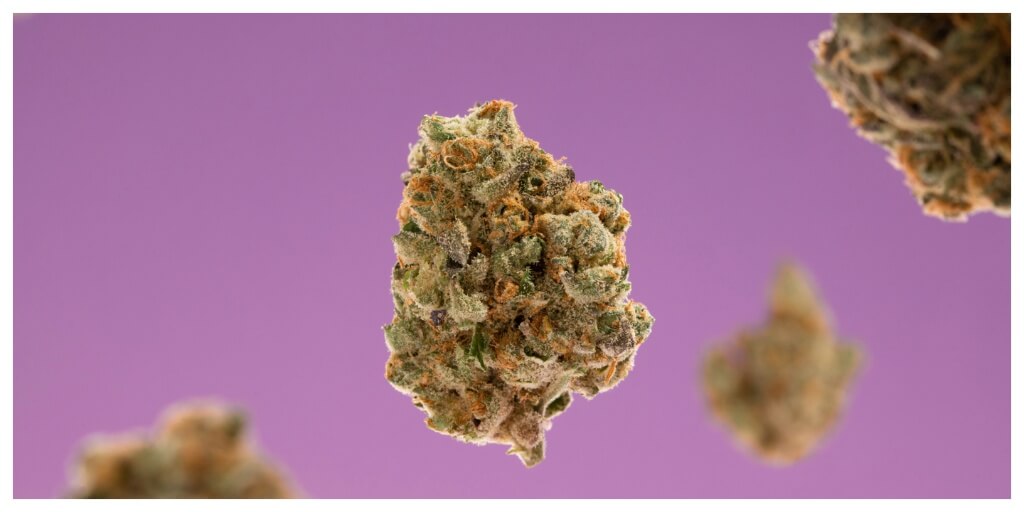
The flowers are the most chemically complex and commercially famous part of the cannabis plant. They contain many of the compounds that people associate with cannabis, including cannabinoids and terpenes.
Cannabinoids are natural compounds found in cannabis. The most well-known cannabinoids include CBD, CBG, THC, CBC, CBN, and THCV. Each has a different profile, and research into these compounds is still developing.
THC is the cannabinoid associated with intoxication. CBD and CBG, on the other hand, are non-intoxicating cannabinoids, which means they do not produce the classic cannabis high. This is why CBD and CBG are commonly used in hemp-derived wellness products such as oils, gummies, capsules, and functional formulas.
CBD is usually associated with calm, balance, and daily wellness routines. CBG is increasingly discussed in connection with daytime formulas and focus-style routines, although it should not be presented as a proven treatment for medical conditions.
The important point is that cannabis is not defined by one compound. It contains a wide range of natural molecules, and the balance between those compounds can change the character of the plant. This is why two hemp flowers can have different aromas, different cannabinoid percentages, and different overall profiles even if they come from the same plant family.
Special offer
60% Off
5% CBD Drops – Full Spectrum Drops | Old Packaging Clearance
19.90 €Original price was: 19.90 €.7.90 €Current price is: 7.90 €.60% OffAdd to basket
The Flowers: Terpenes
Terpenes are the natural aromatic compounds that give cannabis its scent. They are not unique to cannabis. They are also found in many familiar plants, fruits, and herbs, including lemons, lavender, pine trees, mangoes, black pepper, and hops.
In cannabis, terpenes help create the aroma profile of different strains. One strain may smell citrusy and bright, while another may smell earthy, floral, fruity, spicy, piney, or gassy. This is one reason cannabis is often compared to coffee, wine, tea, or craft beer. Quality is not only about strength; it is also about aroma, origin, genetics, freshness, cultivation, and processing.
Common cannabis terpenes include myrcene, limonene, pinene, linalool, caryophyllene, humulene, and terpinolene. These compounds help create the sensory identity of a strain, which is why terpene profiles are important for people who care about flavour, aroma, and product quality.
A good cannabis product should therefore be understood as more than a percentage on a label. Cannabinoid content matters, but so do terpene character, freshness, drying, curing, storage, and lab testing. Together, these factors determine the quality of the final product.
Cannabis in Food and Everyday Products
One of the reasons cannabis has moved into mainstream conversation is that it now appears in many everyday product categories. People may first discover hemp through hemp seeds in a smoothie, hemp protein in a shake, hemp seed oil in a salad dressing, CBD oil in a wellness routine, or CBD gummies as a convenient daily product.
Food and drink products make cannabis easier to understand because they place the plant into familiar habits. Instead of seeing cannabis only as something unusual or controversial, customers begin to see it as an ingredient with different uses.
This is also why CBD drinks, functional gummies, infused teas, and alcohol-free cannabinoid mocktails have become popular in some markets. They make hemp products feel more approachable and less clinical. A CBD lemonade, for example, is a completely different experience from a bottle of oil, even if both can contain hemp-derived CBD.
The same applies to skincare. Hemp seed oil is used in creams, lip balms, face oils, massage oils, hand creams, and body products. CBD is also used in cosmetic formulas, especially balms and body care products. For many people, skincare is their first contact with hemp, long before they ever try CBD oil or hemp flowers.
This is how cannabis gradually moves from stigma into normal life: not through one single product, but through many small, practical uses.
Hemp in Construction and Sustainable Materials
Some of the most interesting uses of hemp are not found in wellness products at all. They are found in materials.
The woody inner part of the hemp stalk, often called hemp hurd, can be used in hemp-lime building materials commonly known as hempcrete. Hempcrete is not the same as structural concrete. It is usually used for insulation and wall systems rather than heavy load-bearing construction. Still, it shows how far the plant’s usefulness can go.
Hemp can also be used in insulation, paper, packaging, textiles, biocomposites, and certain plastic alternatives. This matters because many industries are searching for renewable materials that can reduce dependence on synthetic fibres and fossil-based inputs.
Again, hemp should not be described as automatically sustainable in every situation. The full environmental impact depends on how it is grown, processed, transported, and used. But as a raw material, hemp has serious potential because it can provide multiple outputs from one crop.
This is where cannabis becomes bigger than wellness. It becomes part of a wider conversation about agriculture, materials, design, and resource efficiency.
Why Cannabis Is So Misunderstood
For such a useful plant, cannabis is still surrounded by confusion. One reason is that people often reduce it to a single idea.
Some people only think about THC. Others only think about CBD. Some focus only on the legal debate. Others see cannabis only as a wellness trend. In reality, all of these views are incomplete.
Cannabis is a plant family with many varieties, compounds, and uses. It can be intoxicating or non-intoxicating, depending on the variety and product. It can be used for flowers, oils, seeds, fibres, foods, cosmetics, or materials. It can be part of agriculture, industry, science, culture, and consumer products.
That complexity makes education essential.
People should understand the difference between hemp and cannabis, CBD and THC, hemp seed oil and CBD oil, cannabinoids and terpenes, flowers and seeds, full spectrum and broad spectrum products, and wellness products versus medical claims.
When people lack this information, they often make one of two mistakes. They either fear the plant too much, or they expect too much from it. Neither approach is useful.
Cannabis should not be treated as a dangerous mystery, but it should also not be sold as magic. It should be explained clearly, accurately, and responsibly.
Cannabis Is Not a Miracle Cure
The phrase “miracle plant” can easily be misunderstood, so it needs to be used carefully.
Cannabis is not a miracle cure. No responsible brand, shop, or article should claim that cannabis cures every condition or solves every health problem. Those kinds of claims damage trust and mislead customers.
The real miracle of cannabis is not medical magic. It is practical versatility.
Cannabis can provide fibre for textiles, seeds for food, oil for nutrition and skincare, flowers rich in cannabinoids and terpenes, biomass for extracts, and raw material for industrial uses. It can appear in wellness, agriculture, cosmetics, food, construction, textiles, and research.
That is already impressive without exaggeration.
The plant does not need fake promises to be valuable. Its real story is strong enough.
The Future of Cannabis
The future of cannabis will likely be shaped by better research, clearer regulation, stronger quality standards, and more educated customers.
As the industry matures, people will demand more transparency. They will want to know where the hemp was grown, how the product was made, what cannabinoids it contains, whether it was lab tested, and what the product is actually intended for.
This shift is good for serious brands and responsible producers. It pushes the industry away from hype and toward quality, consistency, traceability, and education.
The most important progress will not only come from new products. It will come from better understanding: understanding the difference between hemp and high-THC cannabis, between CBD oil and hemp seed oil, between aroma and potency, between traditional use and proven science, and between wellness positioning and medical claims.
A plant this complex deserves more than stereotypes. It deserves clear information.
Final Thoughts
Cannabis is called a miracle plant because it has lived many lives throughout human history.
It has been used as fibre, food, oil, medicine, textile, rope, paper, skincare ingredient, wellness product, building material, and research subject. From ancient rope to modern CBD oil, from hemp seeds to terpene-rich flowers, from cosmetics to hempcrete, cannabis has repeatedly found new roles in human life.
That is the red thread of the cannabis story: one plant, many uses.
The more you learn about cannabis, the harder it is to reduce it to just THC, just CBD, or just a trend. It is older than the modern wellness market, more useful than the stereotype, and still being rediscovered in new industries.
Cannabis has some seriously strange names. From Cat Piss and Unicorn Poop to Northern Lights, explore 30 of the funniest, weirdest and most interesting cannabis strain names and the stories behind them.
Hemp is cannabis – but the distinction between hemp and other cannabis varieties can get surprisingly complicated. Learn how THC, CBD, genetics, cultivation, uses and legislation shape the difference between cannabis and hemp.
CBG and lion’s mane are both used in focus supplements, but they work differently. Compare their potential uses, limitations, side effects and suitability for ADHD routines.