Activated carbon filters for smoking are disposable filters filled with activated charcoal. Smokers use them to create a smoother draw, reduce harshness, and keep resin from reaching the mouth. Unlike standard paper tips or glass filters, carbon filters actively trap certain particles and cool down the smoke as it passes through them.
Over the past few years, they’ve become a staple in European rolling culture. Brands like Medusa Filters, ActiTube, and Purize now offer different sizes, airflow styles, and materials to suit every preference.
If you’re wondering how they actually work, whether they affect cannabinoids, or which brand is worth trying, this guide breaks it down clearly and without hype.
They are commonly available in sizes like 5mm, 6mm, 7mm, and 9mm, depending on the roll style and personal preference.
What Are Activated Charcoal Filters?
An activated charcoal filter contains specially processed carbon granules. These granules are designed with an extremely high surface area, which allows them to trap microscopic particles during inhalation.
They are commonly available in sizes like 5mm, 6mm, 7mm, and 9mm, depending on the roll style and personal preference.
In smoking use, the charcoal sits between two caps, often ceramic or plant fiber. When you inhale, smoke moves through the charcoal layer before reaching your mouth.
This process can:
Catch some tar and fine particulate matter
Reduce heat and harshness
Minimize resin buildup on lips and teeth
They are especially popular with people who want a cleaner-feeling draw without switching to vapor devices.
Activated Charcoal vs. Carbon – Is There a Difference?
Short answer: no.
Activated charcoal and activated carbon refer to the same material. “Carbon filter” and “charcoal filter” are used interchangeably in the smoking world.
The key word is activated. Activation is a treatment process that exposes carbon to high temperatures and specific gases. This creates millions of microscopic pores, dramatically increasing surface area.
More surface area means more space for adsorption.
And that leads to the most important concept: adsorption, not absorption.
How Do Carbon Filters For Smoking Work?
When smoke passes through a carbon filter, it comes into contact with highly porous activated charcoal. Instead of soaking things up like a sponge, the carbon binds particles to its surface.
This process is called adsorption.
The porous structure of activated carbon acts like a microscopic maze. As smoke travels through it, certain tar components and fine particles adhere to the carbon’s surface.
The result is often described as a smoother, cooler draw.
What Do Carbon Filters For Smoking Actually Do?
In neutral, non-medical terms, carbon filters can:
Reduce some tar and particulate matter
Lower perceived harshness
Slightly cool the smoke
Keep the mouthpiece cleaner
They do not eliminate all byproducts of combustion. They are not a health device. But, they are a filtration accessory designed to improve comfort and cleanliness.
Many users notice less resin buildup and a smoother inhale, especially with high-resin material.
Do Carbon Filters Reduce THC or CBD?
This is one of the most common questions.
Most brands state that cannabinoid loss is minimal because activated carbon primarily traps heavier particles rather than vaporized compounds. However, any filtration system can potentially reduce a small amount of active compounds.
In practice (which we’ve had a lot of), the experience may feel slightly lighter, but generally not significantly weaker.
The trade-off is smoother airflow versus maximum intensity. It comes down to personal preference.
Carbon Filters vs Normal Filters
Not all filters are built for the same purpose. Here’s how they compare.
Standard Paper or Cardboard Tips
Paper or cardboard tips mainly provide structure.
They:
Stabilize airflow
Prevent loose material from entering the mouth
Improve roll shape
They do not actively filter smoke. They simply create a channel.
Glass or Ceramic Filters
Glass and ceramic filters are reusable and often used for cooling.
They can improve airflow, provide slight cooling and are reusable as they can be cleaned.
However, they do not contain activated carbon, so filtration of fine particles is minimal.
Carbon Filters
Carbon filters actively filter smoke while still maintaining structure.
Compared to standard tips, they offer a smoother draw, make the experience less harsh,
Cleaner mouthpiece
Controlled airflow
The downside is cost per filter and occasional clogging if moisture builds up.
Brand Comparison: Medusa Filters vs ActiTube vs Purize
In Europe, three names dominate the activated charcoal filter space: Medusa Filters, ActiTube, and Purize.
Each offers different airflow styles, cap designs, and size ranges.
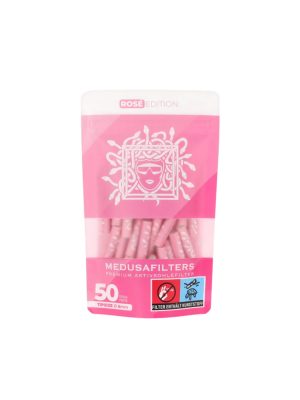
Medusa Carbon Filters
Medusa Filters are known for balanced airflow and reliable construction.
Key features:
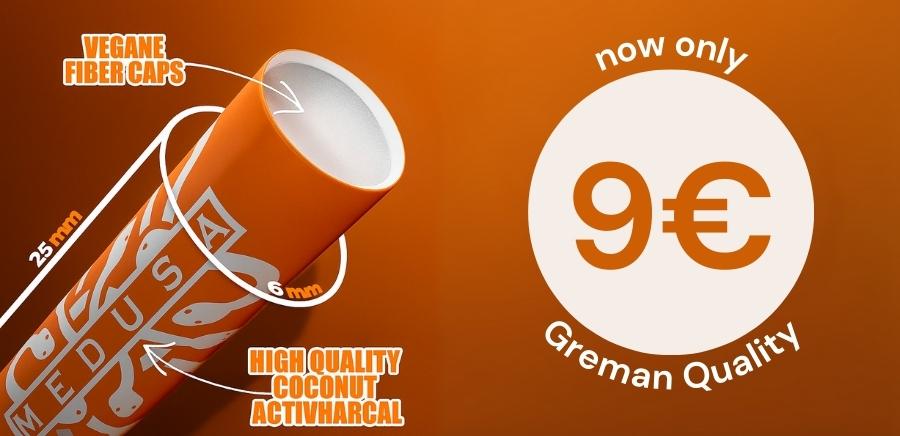
Commonly available in 6mm
Activated coconut carbon
Breathable fiber caps
Mid-range pricing
User reviews often mention smooth draw and less clogging compared to cheaper alternatives.
ActiTube has long been a staple in EU headshops. They offer small packages of 10 filters as well as bulk packages. Their products are the most affordable out of all three brands compared.
Highlights:
Activated carbon granulate
Ceramic caps (depending on model)
Available in multiple sizes
Often budget-friendly in bulk
Some users report a slightly tighter draw on certain models, but many appreciate the consistent filtration.
They are small filters filled with activated carbon granules designed to trap certain particles as smoke passes through.
Are activated charcoal and carbon the same?
Yes. Activated charcoal and activated carbon refer to the same material.
Do carbon filters make smoking healthier?
They can reduce some tar and particles, making the experience less harmful, but they do not eliminate all byproducts of combustion. They are comfort-focused accessories, not health devices.
How many times can you use a charcoal filter?
Most are designed for single use. Reusing can reduce effectiveness and airflow.
Why does my carbon filter feel blocked?
Moisture buildup or heavy resin can clog the charcoal, restricting airflow.
Are carbon filters for smoking better than regular tips?
They offer active filtration and smoother draw, while regular tips mainly provide structure.
What size charcoal filter should I buy?
Common sizes include 5mm for slim rolls and 6–9mm for standard rolls. Choose based on your preferred roll diameter.
Do carbon filters for smoking change the taste?
Some users notice a slightly cleaner or lighter taste. Others report minimal difference.
By using activated charcoal, brands like Medusa Filters, ActiTube, and Purize have made smoother sessions accessible without changing the ritual.
If you care about airflow, cleanliness, and comfort, carbon filters are worth testing. The right size and brand come down to preference, but the principle stays the same: a smooth and clean inhale, cooler experience, and better overall feel.
Hemp is cannabis – but the distinction between hemp and other cannabis varieties can get surprisingly complicated. Learn how THC, CBD, genetics, cultivation, uses and legislation shape the difference between cannabis and hemp.
CBG and lion’s mane are both used in focus supplements, but they work differently. Compare their potential uses, limitations, side effects and suitability for ADHD routines.
Think you don’t fit the stoner stereotype? Give it five minutes. From joint purists and dab scientists to edible gamblers, festival stoners and people who mysteriously own 17 grinders, these are the 27 cannabis personalities every group somehow has.