The choice of your rolling paper can make all the difference in your session. While papers look similar at first glance, the materials, refinement process, and size all play a major role in the smoking experience.
This guide breaks down the most common types of rolling papers, their characteristics, and how they affect taste, burn, and sustainability, helping you find the perfect match for your preferences.
What Are Rolling Papers Made Of?
Modern rolling papers are made from a variety of plant-based materials, each offering its own combination of burn rate, flavour, and environmental impact. The most common types include:
- Wood pulp
- Hemp
- Flax
- Cellulose (transparent)
- Rice
Below, we take a closer look at what sets each apart.
Wood Pulp Rolling Papers
The classic and most common type of rolling paper, wood pulp papers are made from refined plant fibres. During production, the lignin (a natural polymer that gives plants their structure) is removed. The degree of refinement determines the colour: bright white papers are highly processed (and sometimes bleached), while natural brown papers are less refined and unbleached.
Why people choose them:
- Easy to roll and durable – ideal for beginners
- Neutral taste unless flavoured
- Consistent burn rate
- Available almost everywhere
Wood pulp papers are accessible, reliable and perfect if you want a straightforward experience.

Hemp Rolling Papers
Among today’s alternatives, hemp rolling papers stand out for their natural origin and sustainability. Made from the fibres of industrial hemp, they’re stronger and less prone to tearing than standard pulp papers, while offering a slower burn.
Their slightly earthy tone complements the flavour of the flower, making hemp papers especially popular among those who prefer a more natural smoking experience.
Key characteristics:
- Burn rate: slow and consistent
- Taste: mild, earthy undertone
- Eco-impact: very low compared to other types
- Texture: firm but easy to roll
In Europe, hemp has long been valued as a renewable resource, and the same holds true for rolling papers. Many brands now produce organic, unbleached hemp papers, combining sustainability with high performance.

Flax Rolling Papers
A lesser-known but elegant option, flax papers are made from the fibres of the linseed plant. They’re naturally thin, silky, and burn slowly, often leaving little to no flavour behind.
Advantages:
- Almost flavourless for a pure taste
- Slow, even burn
- Eco-friendly and plant-based
Because flax papers are thinner and more delicate, they can be more challenging to roll, but the result is a refined, slow-burning joint that highlights the natural flavour of the herb.
Transparent (Cellulose) Rolling Papers
At first glance, transparent papers look like plastic, but they’re actually made from natural cellulose derived from wood pulp. The plant material is processed into ultra-thin, glassy sheets that create the signature “see-through” appearance.
Pros:
- Neutral in taste
- Smooth, even burn
- Visually unique – great for social settings
Cons:
- Trickier to roll, especially for beginners
- Slightly faster burn rate compared to hemp or pulp
Transparent papers are best for those who enjoy experimenting or want a cleaner, novelty look for special occasions.

Rice Rolling Papers
The term “rice paper” has long caused confusion in the rolling world. For a long time, it didn’t refer to papers made from rice at all, but rather to classic ultra-thin, highly refined papers (usually from wood pulp) that delivered a slow and pure smoke.
However, as the industry shifted toward natural and transparent production, some brands now offer authentic rice-based rolling papers, crafted from rice fibers or rice byproducts. These newer versions stay true to the name, offering a refined, delicate option for purists seeking a neutral taste.
Advantages:
-
Extremely thin and lightweight – burns slowly and evenly.
-
Minimal paper taste, allowing the flower’s flavour to shine through.
-
Often translucent, giving a premium, clean look.
Drawbacks:
-
Can be more fragile and trickier to roll, especially for beginners.
-
Less grip and structure than hemp or wood pulp papers, making them sensitive to humidity or over-handling.
👉 Note: Because of updated advertising standards, many brands now label these as “ultra-thin white papers” instead of “rice papers” to avoid confusion between rice-based and wood pulp products.

White vs. Brown Rolling Papers
One of the most noticeable differences on the shelf is colour: white or brown. Contrary to popular belief, it has little to do with bleaching – especially nowadays.
- White papers are made from more processed pulp, resulting in a lighter colour and a slightly faster, cleaner burn.
- Brown papers are less processed, leaving more natural plant fibres intact, which gives them a warmer hue and a subtle, earthy flavour.
In both cases, the material itself determines burn speed and strength, not added chemicals. Modern paper manufacturing avoids harsh bleaching agents, making both options safe to use.
Bleached vs. Unbleached Rolling Papers: Clearing Up the Myth
Let’s start with the obvious: white papers are more refined, while brown papers are less processed.
However, the term “bleached” doesn’t mean that harmful chlorine is used anymore. Modern rolling paper production, especially in Europe, relies on oxygen-based whitening processes, which are completely chlorine-free and non-toxic.
- Bleached (white) papers are made from pulp that’s been more thoroughly refined, with natural fibers treated using oxygen or ozone to achieve that bright white appearance.
The result is a clean-burning, thin, and neutral-tasting paper preferred by smokers who value consistency and minimal flavor interference.
- Unbleached (brown or beige) papers undergo less refinement, meaning more of the natural color and composition of the plant fibers remains.
They’re often seen as the eco-friendlier option, slightly thicker, and may burn a little slower. Many smokers appreciate their natural look and feel, even if the difference in taste is subtle at best.
Rolling Paper Thickness
When we talk about paper “thickness,” we’re really talking about how dense and sturdy a rolling paper feels in your hands and how that affects the burn and rollability.
Thickness is measured in grams per square metre (gsm), but don’t worry, you don’t need to be a paper engineer to understand what that means.
Here’s a quick comparison:
- Office printer paper: 70-90 gsm (pretty thick!)
- Tissue paper: 10-35 gsm
- Rolling papers: around 12-15 gsm
In simpler terms, rolling papers are much thinner than standard paper, that’s what makes them burn slowly and evenly.
Thicker papers (closer to 15 gsm) are easier to roll and more forgiving for beginners, while ultra-thin papers (closer to 12 gsm) burn slower and cleaner but require a bit more skill to handle.
👉 If you’re just starting out, begin with slightly thicker papers and work your way down once you get comfortable.

Forms of Rolling Papers
Rolling papers today come in more than just the classic little booklet. Depending on how you like to smoke, and how much effort you want to put into rolling, you’ve got options.
1. Rolling Paper Rolls
Think of these like a “choose your own adventure” version of rolling papers.
You pull out exactly as much as you need, tear it off, and roll.
They’re perfect for:
- Anyone who likes custom sizes
- Creative rollers (cross joints, anyone?)
- People who dislike wasting paper.

2. Pre-Rolled Cones & Tubes
For those who prefer convenience, pre-rolled cones and pre-rolled tubes do all the work for you. Just grind your flower, fill, pack, and twist.
They’re made from the same materials as quality rolling papers and usually include a filter tip. Sometimes even wood, glass, ceramic or active-charcoal for a premium feel.
Why people love them:
- No rolling skills required
- Consistent burn every time
- Ideal for quick, mess-free sessions

Rolling Paper Sizes: One for Every Occasion
Just like you wouldn’t use the same cup for an espresso and a smoothie, different rolling paper sizes serve different needs.
Here’s a breakdown of the most common ones.
Single Wide
The smallest and most compact, this is the standard cigarette size.
Perfect for solo sessions or a quick smoke on the go.
Quick facts:
- Holds: up to ~0.5 g
- Best for: quick sessions, beginners
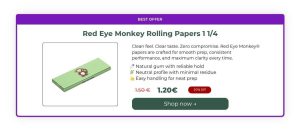
1 ¼ Size
Slightly wider and longer than a cigarette, ideal for half a gram with a little extra room for comfort.
Quick facts:
- Holds: ~0.6 g
- Best for: quick sessions on the go, moderate users
King Size Slim
This is the most popular paper size worldwide. About the length of 10cm, they allow for a long, thin roll, straight or in a cone shape.
Quick facts:
- Holds: up to ~1 g
- Best for: chill smoke sesh, sharing
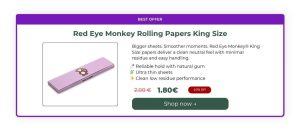
King Size
As long as a king slim but wider – allowing for a thicker joint.
Perfect for everyday smokers and smoke circles.
Quick facts:
- Holds: around 1 g
- Best for: sharing or long sessions
Wide or Extra-Wide
Shorter but fatter, ideal for those who prefer thicker joints with more material.
These papers pack a punch and are popular among experienced rollers.
Quick facts:
- Holds: more than 1g
- Best for: heavy hitters or custom rolls

Where to Buy Rolling Papers
Rolling papers are one of those rare smoking essentials you can find almost anywhere, from gas stations, local smoke shops, and convenience stores to trusted online retailers.
Because rolling papers contain no THC, they can be legally sold in most countries, both in physical stores and online. However, an age restriction usually applies – you must be 18 or older in most European countries to purchase rolling papers or related smoking accessories.
Harmful Additives in Rolling Papers to Avoid
While reputable manufacturers use clean processes and natural materials, not every rolling paper in the global market meets those standards. Some cheaper products, often imported or unregulated, may still include unnecessary additives. Here’s what to watch for:
1. Chlorine Bleach
Once widely used as a whitening agent, chlorine bleach has been almost entirely phased out by reputable paper producers.
When combusted, chlorine can release toxic compounds that irritate the lungs and leave behind an unpleasant taste.
If you’re buying from trusted well-positioned brands, you’re safe, but it’s still wise to check that packaging clearly states “chlorine-free” or “natural whitening.”
Note: The absence of a “chlorine-free” label doesn’t necessarily mean a product contains chlorine bleach. In many cases, it simply reflects a different marketing focus or regional labeling practice. Most reputable brands that comply with European pulp-sourcing standards produce papers that are effectively chlorine-free by default.
2. Potassium Nitrate
Historically added to regulate burn rate and make papers easier to light, potassium nitrate can produce harmful byproducts when burned. Most modern rolling papers no longer use it, but it’s best to avoid anything that lists “burn accelerants.”
3. Titanium Dioxide
Used both as a whitening agent and burn regulator, titanium dioxide is common in many industries but not ideal when inhaled. It can irritate the lungs and, in high concentrations, is considered a potential carcinogen when combusted.
4. Artificial Dyes and Flavors
While colorful or flavored papers might look fun, artificial dyes can contain heavy metals or petroleum-based compounds that release toxins when smoked. Choose natural or food-grade alternatives instead.
5. Calcium Carbonate (Chalk)
Sometimes used as a filler or to slow burn rate, calcium carbonate can leave behind residue and heavier ash. It’s generally safe, but unnecessary in quality papers made with clean, natural fibers.
Pro tip:
If you stick to unrefined, chlorine-free, or organic-certified papers, you’ll automatically avoid nearly all of these additives.
These products are not only safer but also offer a cleaner, more pure smoke, exactly what you want from a high-quality rolling paper.
Tips for Choosing the Right Paper
Choosing the right paper doesn’t have to be complicated. Keep these tips in mind:
- Consider Your Skill Level: Beginners can experiment from slightly thicker papers or pre-rolled cones, while experienced rollers often benefit from ultra-thin or specialty papers.
- Think About Size: Single, 1¼, king, or wide papers are suited for different situations: personal, social, or ceremonial.
- Experiment: Trying different materials, brands, and even specialty papers is the best way to discover your ideal match.

Final Thoughts
The type of rolling paper you choose, from hemp to rice or unbleached natural fibre, shapes your smoking experience more than you might think. Focus on quality materials, clean burns, and the format that fits your style best.
Shop rolling papers at Red Eye Monkey – a collection made for everyone’s needs.